
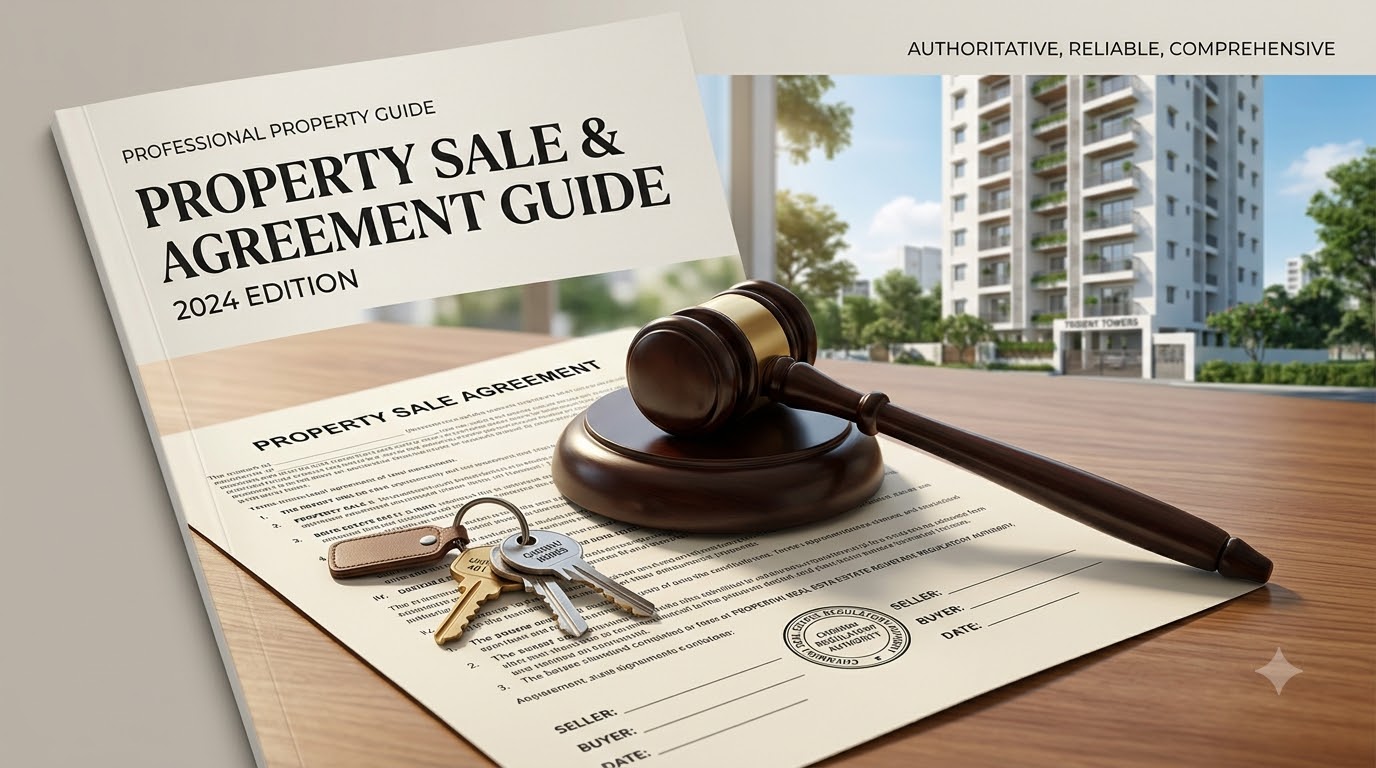
Property Legal Terms Every Chennai Flat Buyer Must Know in 2026
Buying a flat in Chennai involves more paperwork than most buyers anticipate — and the legal terminology in sale agreements, title deeds, and government documents can be genuinely confusing for first-time buyers. Understanding what each term means before you sign can prevent costly mistakes and protect your investment. This plain-English glossary covers every key term you will encounter in a South Chennai flat purchase.
Title and Ownership Terms
Clear Title
A property with a clear title has no legal disputes, encumbrances, loans, or claims against it. The ownership chain from the original patta holder to the current seller is documented, continuous, and uncontested. Always verify clear title through an encumbrance certificate and a title search by an advocate before purchasing.
Encumbrance Certificate (EC)
An EC is a document issued by the Sub-Registrar's office that records all financial transactions against a property over a specified period — typically the last 13 to 30 years. It shows if the property has any outstanding loans, mortgages, or legal disputes registered against it. A clean EC with no entries means the property is free of registered encumbrances.
Patta and Chitta
A Patta is a document issued by the Tahsildar's office establishing who the land owner is as per government records. Chitta records the nature of the land — agricultural or non-agricultural. For apartment purchases, the land should have been converted to non-agricultural use (NA patta) before construction. Verify patta status at tnreginet.gov.in.
Apartment-Specific Legal Terms
Undivided Share (UDS)
In an apartment, you own your individual flat plus a proportionate share of the land on which the entire building stands. This land share is called the Undivided Share or UDS. It is expressed as a fraction — for example, 650/15000 sqft, meaning you own 650 sqft of the total 15,000 sqft land area shared among all flat owners.
UDS is crucial because in a redevelopment scenario, your land rights are determined by your UDS. Always verify that the UDS in your sale agreement matches the approved plan documents.
Occupancy Certificate (OC) and Completion Certificate (CC)
The Occupancy Certificate is issued by the local authority (CMDA or municipal body) certifying that the building has been constructed as per the approved plan and is safe for occupation. This is a mandatory document — without an OC, the building is technically unauthorised. An OC is also required for GST exemption on the flat purchase.
The Completion Certificate is issued by the structural engineer or project engineer certifying that construction is complete as per specifications.
Agreement and Registration Terms
Sale Agreement vs Sale Deed
A Sale Agreement (also called Agreement to Sell) is a contract between buyer and seller that sets out the terms — price, payment schedule, possession date, and penalty clauses. It is typically executed on stamp paper but is not the final transfer of ownership.
The Sale Deed (also called Conveyance Deed) is the final document registered at the Sub-Registrar's office that legally transfers ownership from the seller to the buyer. The property is legally yours only after the Sale Deed is registered.
TNRERA Registration Number
Tamil Nadu Real Estate Regulatory Authority registration is mandatory for any residential project with more than 8 units or on land exceeding 500 sqm. The TNRERA number confirms the project is registered and the builder has deposited 70 percent of collections in an escrow account. Always verify the number at tnrera.in before booking.
Key Financial and Loan Terms
A few terms from home loan documents that buyers frequently ask about:
• Disbursement — the actual release of home loan funds from bank to builder, done in tranches for under-construction properties
• Sanction letter — the bank's formal approval of your loan amount, valid typically for 6 months
• Pre-EMI — interest-only payment during construction before full EMI begins
• MOD (Memorandum of Deposit of Title Deed) — a document created when title deeds are deposited with the bank as collateral for the home loan
• NOC (No Objection Certificate) — certificate from the bank stating no dues when you repay the loan in full
Frequently Asked Questions
What is the difference between built-up area and carpet area in Chennai flat purchase?
Carpet area is the actual usable area inside your flat measured wall to wall — the area where you can lay a carpet. Built-up area includes carpet area plus wall thickness and balcony. Super built-up area (also called saleable area) further includes your proportionate share of common areas like lobby, staircase, and lift. TNRERA mandates that builders quote and sell based on carpet area, making it easier to compare flats accurately.
Is a sale agreement legally binding in Tamil Nadu?
Yes, a registered sale agreement is legally binding. However, it does not transfer ownership — that requires a registered sale deed. A sale agreement protects the buyer by locking in the price and terms, and grants the right to specific performance in court if the seller backs out. Always register your sale agreement rather than relying on a notarised version.
What happens if a builder does not give the Occupancy Certificate?
Without an OC, the building is legally unauthorised. You cannot get a legitimate utility connection, you cannot register the flat for GST exemption, and banks may hesitate to provide home loans. Under TNRERA, failure to obtain and provide an OC is a deficiency in service — buyers can file a complaint with the TNRERA authority and seek remedies including compensation. Book a Free Consultation — Buy Your South Chennai Flat with Confidence
Conclusion
Understanding these legal terms before you engage with a builder or sign any document will save you from costly mistakes and give you the confidence to ask the right questions. GCC Group's team is happy to walk you through every document in the purchase process — from booking form to registration — in plain, simple language.