
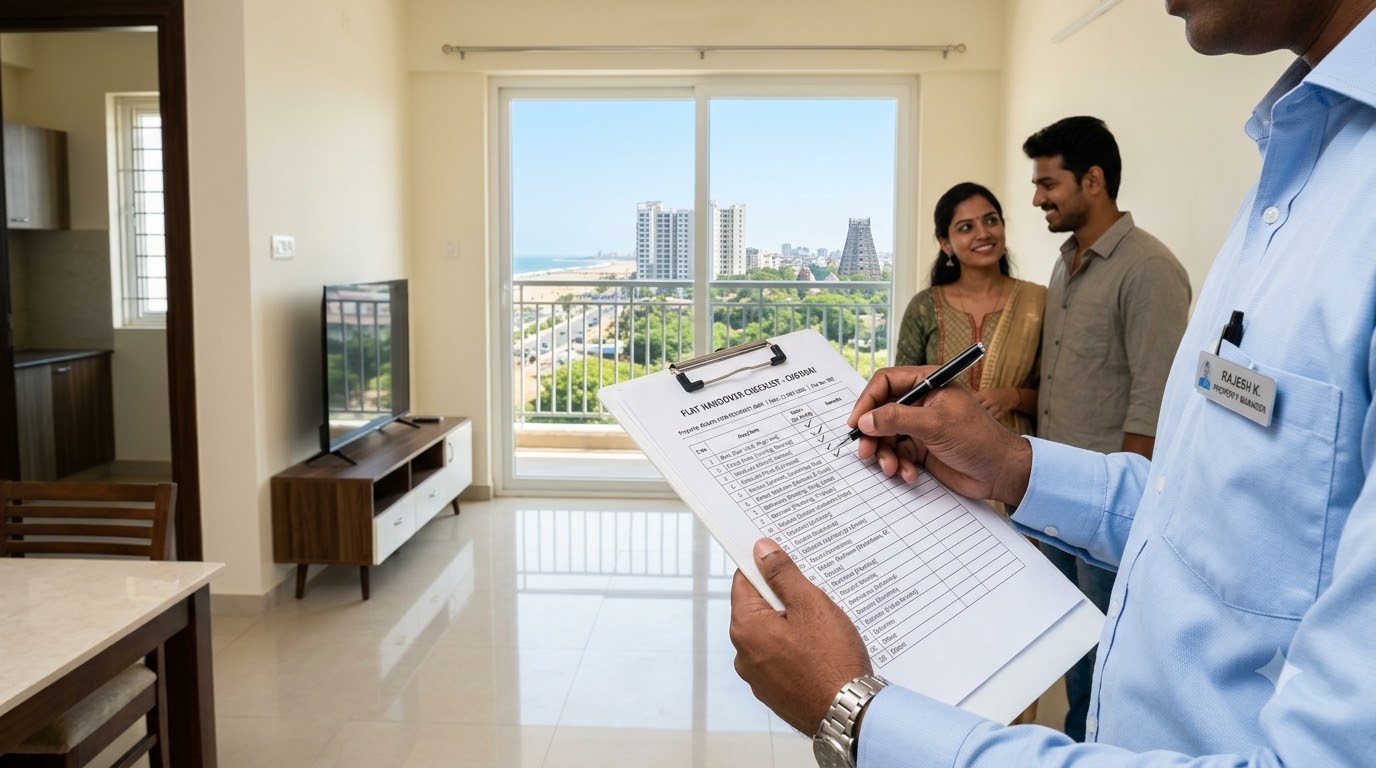
Flat Handover Checklist Chennai: What to Check Before Taking Possession
Taking possession of your new flat is one of the most exciting moments in a home buyer's journey — but it can also be one of the most stressful if you are not prepared. Many buyers in Chennai make the mistake of signing the handover receipt without a thorough inspection, only to discover defects and incomplete work weeks later. This checklist will ensure you do not miss a single thing before you sign.
Why a Flat Handover Inspection Matters
Once you sign the possession letter and handover receipt, you are legally accepting the flat in its current condition. Any defects or incomplete items you discover afterwards become significantly harder to get the builder to fix. Builders are legally obligated to provide a defect liability period — typically 2 to 5 years under TNRERA — but getting them to respond to punch list items after handover is far easier when the issues are documented before you sign.
In South Chennai localities like Tambaram, Chromepet, and Selaiyur, where new residential projects are delivering units rapidly, buyers who inspect thoroughly almost always get better handovers than those who trust that everything will be fine.
Civil and Construction Quality Checks
Start with the walls, floors, and ceiling before anything else. Run your hand along walls to feel for cracks, bumps, or rough plastering. Check corners and edges where two walls meet — these areas are common spots for poor finishing. Tap hollow tiles with a coin — a hollow sound means the tile is not properly bonded and will loosen over time.
Check the flooring level with a spirit level or marble ball — the floor should be perfectly level with no dips or rises. Inspect the ceiling for water stains, cracks, or discolouration that could indicate seepage from the floor above. In the balcony and bathrooms, verify that the slope drains towards the drain point and does not pond water.
Plumbing, Electrical, and Utilities Checklist
Plumbing
Open every tap in every bathroom and the kitchen simultaneously. Check water pressure, flow rate, and drainage speed. Run the shower for two minutes and look for any seepage on the wall. Flush the toilet and verify the cistern refills correctly. Check under sinks for damp patches or water marks that indicate past leaks.
Electrical
Test every switch, socket, fan, and light point in every room. Bring a plug-in tester or phone charger to test sockets. Check the MCB (miniature circuit breaker) panel — every circuit should be clearly labelled. Verify that earthing is properly done — this is a safety requirement. Check the split AC mounting brackets if pre-installed.
Verify the meter connection is in your name and the EB (Electricity Board) connection is active.
Doors, Windows, and Fittings Inspection
Open and close every door — it should swing smoothly without scraping the floor or frame. Check that all door locks and handles function correctly. For windows and sliding doors, check that frames are square and there are no gaps that would allow rain or insects in. Verify that window grilles if promised are installed.
Check kitchen counter height, sink quality, and whether the overhead loft space matches what was promised in the plan. Verify bathroom fittings — the quality of taps, shower heads, and toilet brand should match the specification sheet in your sale agreement.
Documents to Collect at Handover
Do not leave the handover without collecting these documents:
Original sale deed registered at the Sub-Registrar's office
Occupancy Certificate (OC) issued by CMDA or local authority
Completion Certificate from the structural engineer
TNRERA project registration certificate
NOC from the bank if the builder had a construction loan on the land
Utility connection documents — EB meter, water board connection
Maintenance charge receipt and society formation documents
Parking slot allotment letter in writing
Frequently Asked Questions
What is the defect liability period for new flats in Tamil Nadu?
Under TNRERA, builders must rectify structural defects and poor workmanship reported within 5 years of possession at no cost to the buyer. Document every defect at handover with photographs and written communication to the builder to protect your rights during this period.
Can I refuse to take possession if the flat has defects?
Yes. You have the right to refuse possession and request a re-inspection after defects are rectified. Always communicate defects in writing — email to the builder's official address — before signing any possession-related documents. Do not sign under pressure if outstanding issues remain unresolved.
Does GCC Group provide a handover inspection checklist?
Yes. GCC Group conducts a quality inspection walkthrough with every buyer before handover. Our team walks you through every room, demonstrates all fittings, and addresses any punch list items before you sign the possession letter. Our goal is a zero-defect handover experience.
▶ Book a Site Visit with GCC Group — South Chennai's Trusted Builder
Conclusion
A thorough flat handover inspection takes two to three hours but protects you from months of follow-up frustration. Use this checklist on the day of possession, document everything with photographs, and do not sign until you are satisfied. GCC Group's projects in South Chennai are built to quality standards that make this process smooth — but inspect thoroughly regardless.